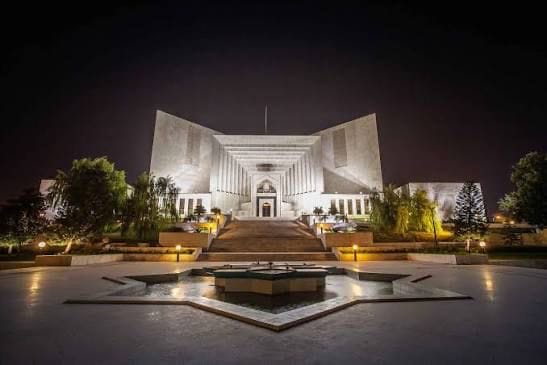
The Supreme Court of Pakistan has launched the country’s first Supreme Court Court-Annexed Mediation Centre, aimed at supporting the resolution of disputes through mediation within the judicial system.
The centre, opened on 18 August 2026, was established under the EU-funded Deliver Justice Project, in cooperation with UNDP Pakistan. Through the centre, files deemed suitable for mediation are intended to be referred by the court to a structured mediation process.
The Legal Aid Society and its Musaliha International Center for Arbitration & Dispute Resolution (MICADR) are undertaking the operation of the centre. Under the protocol signed between the Supreme Court of Pakistan and the Legal Aid Society, plans include case management, the development of standard operating procedures, and the establishment of the centre’s operational infrastructure.
The programme also has a capacity-building dimension. Twenty-four Supreme Court officials are expected to receive mediation training to International Mediation Institute standards through MICADR. The system being built is planned to be handed over to the Supreme Court following a defined implementation period.
Mediation’s Place Within the Judicial System Is Strengthening
The development in Pakistan shows that court-annexed mediation models are increasingly being addressed within institutional structures.
In these models, mediation and litigation are not treated as interchangeable methods, but positioned within the same system as different processes to be used depending on the nature of the dispute. The court can refer suitable files to mediation, while litigation continues for disputes where no settlement is reached.
Notable in this respect is that Pakistan’s recent efforts in legal education, mediator training and ADR infrastructure development are now being supported by an institutional mechanism at the Supreme Court level.
The success of court-annexed mediation systems, following the establishment of a centre, will be determined by referral criteria, the qualifications of mediators, process standards, confidentiality, the parties’ trust in the process, and the regular monitoring of outcomes.
The Pakistan example is one of the current instances of mediation being institutionalized not as an alternative to the judiciary, but as one of the components of an effective dispute resolution system.
Source
Supreme Court of Pakistan, UNDP Pakistan, Legal Aid Society.