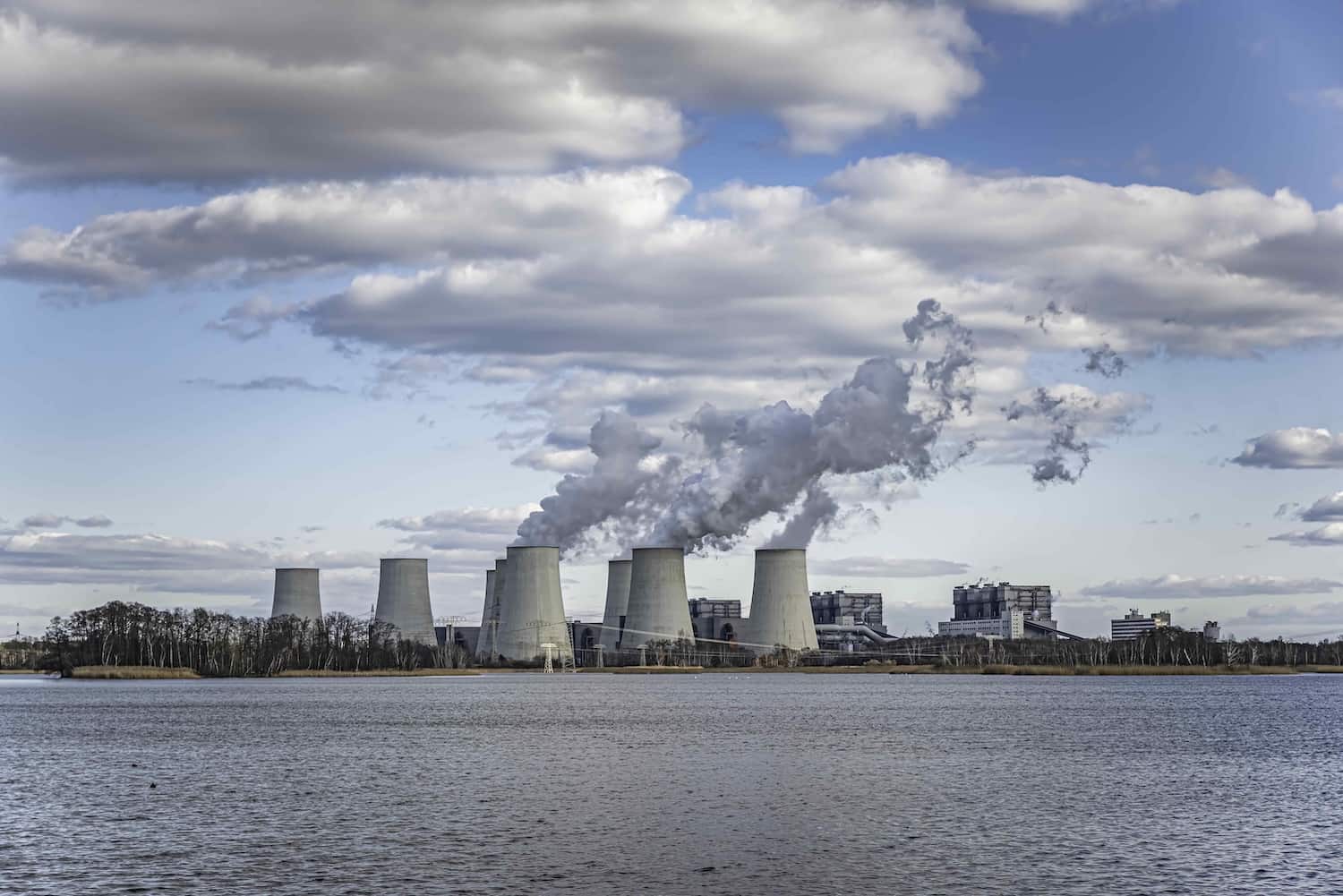
As host of COP31, Turkey will sit at the centre of global climate diplomacy. But independently of the negotiating table in Antalya, the country’s own energy transition has already begun producing disputes on the ground. The tension between phasing out coal and new coal investments has, today, turned into concrete legal and social disputes among local residents, civil society organisations, and investors in at least three separate regions.
Afşin Elbistan: A Forty-Year Struggle
In the Afşin and Elbistan districts of Kahramanmaraş, the local population’s struggle against coal pollution is approaching forty years. After the Ministry of Environment, Urbanisation and Climate Change approved, in December 2024, an environmental impact assessment for two new units at the Afşin Elbistan A thermal power plant, the municipalities of Elbistan and Nurhak, the Turkish Medical Association, the TEMA Foundation, Greenpeace Turkey, and local residents filed a lawsuit. An expert report submitted in September 2025 concluded that the project did not serve the public interest; a second expert report submitted in February 2026 also confirmed that the project was not appropriate. Scientific studies show that the existing coal plants in the region caused approximately 17,500 premature deaths from their establishment through 2020.
Çanakkale: A Public Forum Against a Capacity Increase
In Çanakkale, the CENAL coal-fired thermal power plant owned by Cengiz Holding is seeking to add a new 1,050 megawatt unit to its existing 1,320 megawatt installed capacity, raising its total capacity to 2,370 megawatts. At a public forum held under the call “Çanakkale Without Coal,” local residents demanded the project’s cancellation, stating it would increase air pollution and threaten the Karabiga coastal ecosystem; the Turkish Thoracic Society also emphasised that public health cannot be sacrificed for short-term energy justifications. The five coal-fired thermal power plants within Çanakkale’s borders are calculated to have caused at least 3,167 premature deaths through 2020, with the economic cost of this impact estimated at approximately USD 7 billion. Fifteen civil society organisations working on climate issues pointed out that Turkey, which will chair COP31, permitting a new imported-coal plant during this process contradicts its claim to climate leadership.
Amasra: A Record Number of Plaintiffs
Following the environmental impact assessment approval for the coal-fired thermal power plant project planned in the Amasra district of Bartın, the lawsuit filed by local residents set a record among Turkey’s environmental cases with 2,019 individual plaintiffs. The court ruled that an expert examination be carried out in the villages of Tarlaağzı and Gömü, where the plant is to be built.
The Common Thread: The Dispute Goes All the Way to Court, and Does Not End There
What these three examples have in common is that the dispute remains unresolved first through the administrative process, then through the courts, sometimes for more than a decade. Even once a court ruling is issued, the trust relationship between local residents and the investor and public authority remains unrepaired; the parties still have to sustain their relationship in the same region, over the same resources. This is precisely the space where alternative dispute resolution methods can complement litigation, without replacing it. Structured negotiation and facilitation processes established at an early stage among the investor, the public authority, and the local community can clarify concrete commitments on a project’s health and environmental impacts around the table, long before a lawsuit is filed.
This approach does not replace litigation; it does not stand in the way of pursuing rights through legal channels. But it offers a mechanism that can keep the parties at the same table both during and after litigation. Turkey’s hosting of COP31 is also an opportunity to show how these mechanisms can work on the ground.
Which Sustainable Development Goals Does This Article Support?
- SDG 3, Good Health and Well-Being: Incorporating the public health impacts of coal-related air pollution into dispute resolution processes.
- SDG 13, Climate Action: Developing early-stage settlement mechanisms for energy transition projects.
- SDG 16, Peace, Justice and Strong Institutions: Preserving trust among the local community, the investor, and the public authority.
Sources
- Cumhuriyet, the lawsuit over the Afşin Elbistan thermal power plant project (2026).
- Birgün, Cengiz Holding’s insistence on coal: rising opposition in Çanakkale.
- Enerji Günlüğü, civil society organisations’ opposition to the Çanakkale thermal power plant.
- 350 Türkiye, Amasra B Coal Mine and Coal-Fired Thermal Power Plant.