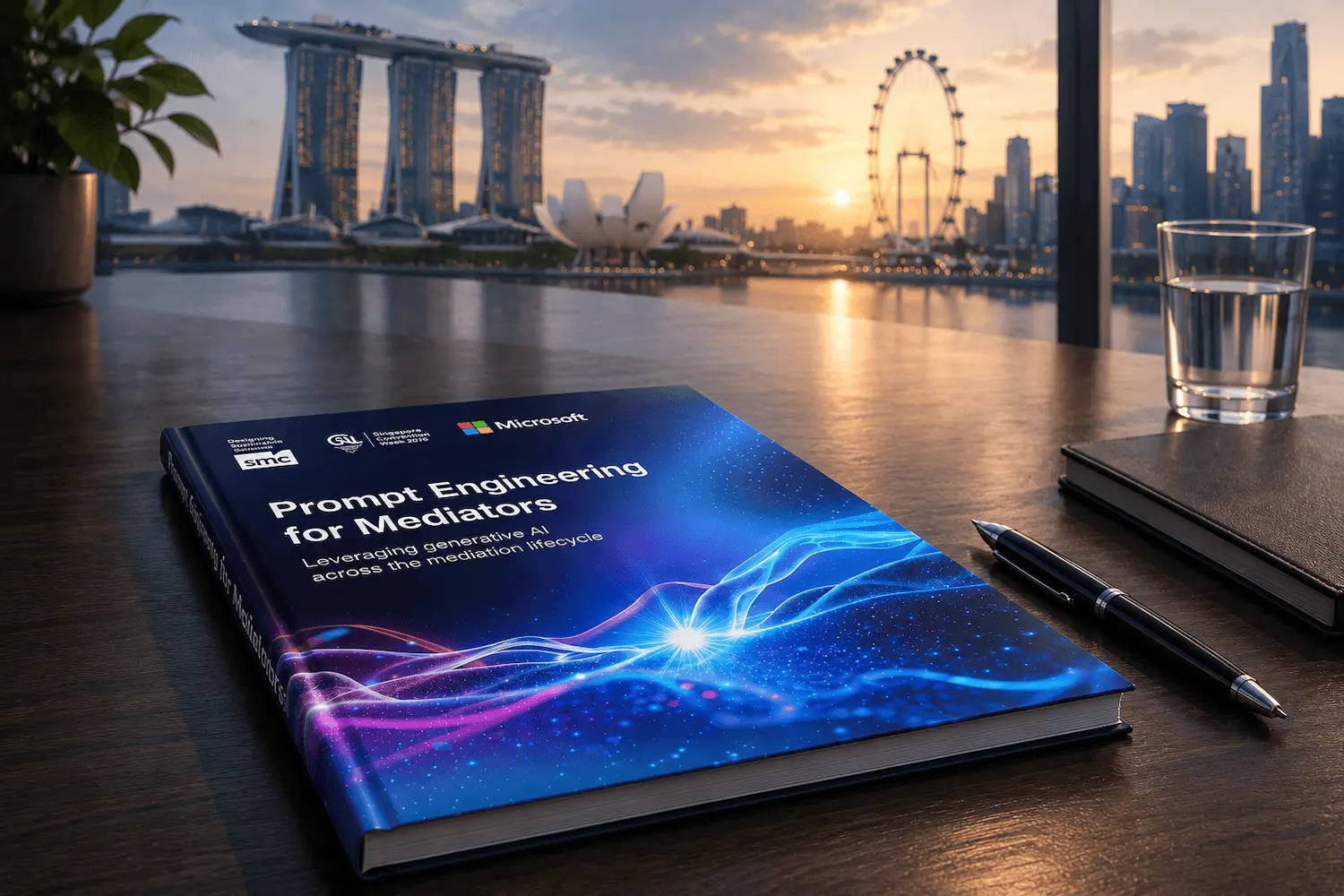
On the fourth day of Singapore Convention Week 2026, the Singapore Mediation Centre (SMC), the Singapore Academy of Law, and Microsoft jointly released the first edition of “Prompt Engineering for Mediators,” a guide setting out a concrete, practice oriented framework for the responsible use of generative AI at every stage of the mediation process.
AI as a “Thinking Partner”
The guide’s central premise is clear: generative AI is meant to accompany the mediator, not replace them. It suggests AI can help simplify a dispute and draft a neutral issue list during preparation, generate options and reframe language during a session, and produce a first draft of settlement terms afterward. At the same time, it is explicit that reading a party’s emotional readiness, building trust, managing a fair process, and forming final judgment remain tasks only the mediator can perform.
Six Rules for Mediators
The guide sets out six core rules every mediator should follow when using generative AI: treat it as an aid rather than a substitute for professional judgment, never enter confidential mediation material into a public AI tool, anonymise data on non enterprise platforms, verify every output before relying on or sharing it, treat AI generated content as possibilities to explore rather than conclusions, and remain transparent with parties about its use. The guide also includes a sample disclosure statement mediators can adapt for this purpose.
Confidentiality: What Can Go Into Which Tool?
One of the guide’s most concrete sections maps different categories of information to the tools appropriate for them. Public judgments and general reference material may be used, anonymised, on enterprise tools, while information shared in private caucus sessions and parties’ confidential admissions should never be entered into any AI tool unless governed by a clear, audited enterprise arrangement and party consent. Personal data must be redacted before any use.
Public Tools or Enterprise Tools?
The guide also draws a detailed distinction between free consumer chatbots and enterprise tools deployed under an organisation’s own data protection commitments. General research and public material are considered suitable for public tools, while mediation specific material, even anonymised, should generally be limited to enterprise tools.
ADRİstanbul’s Perspective
This guide gives concrete shape to a theme that has surfaced repeatedly throughout Singapore Convention Week: as technology becomes part of dispute resolution, what matters most is not the power of the tool but how trust and process integrity are preserved. The guide’s confidentiality categories and six rules offer a practical example of how mediation’s party driven, trust centred nature can be protected in the age of generative AI.
Sustainable Development Goals