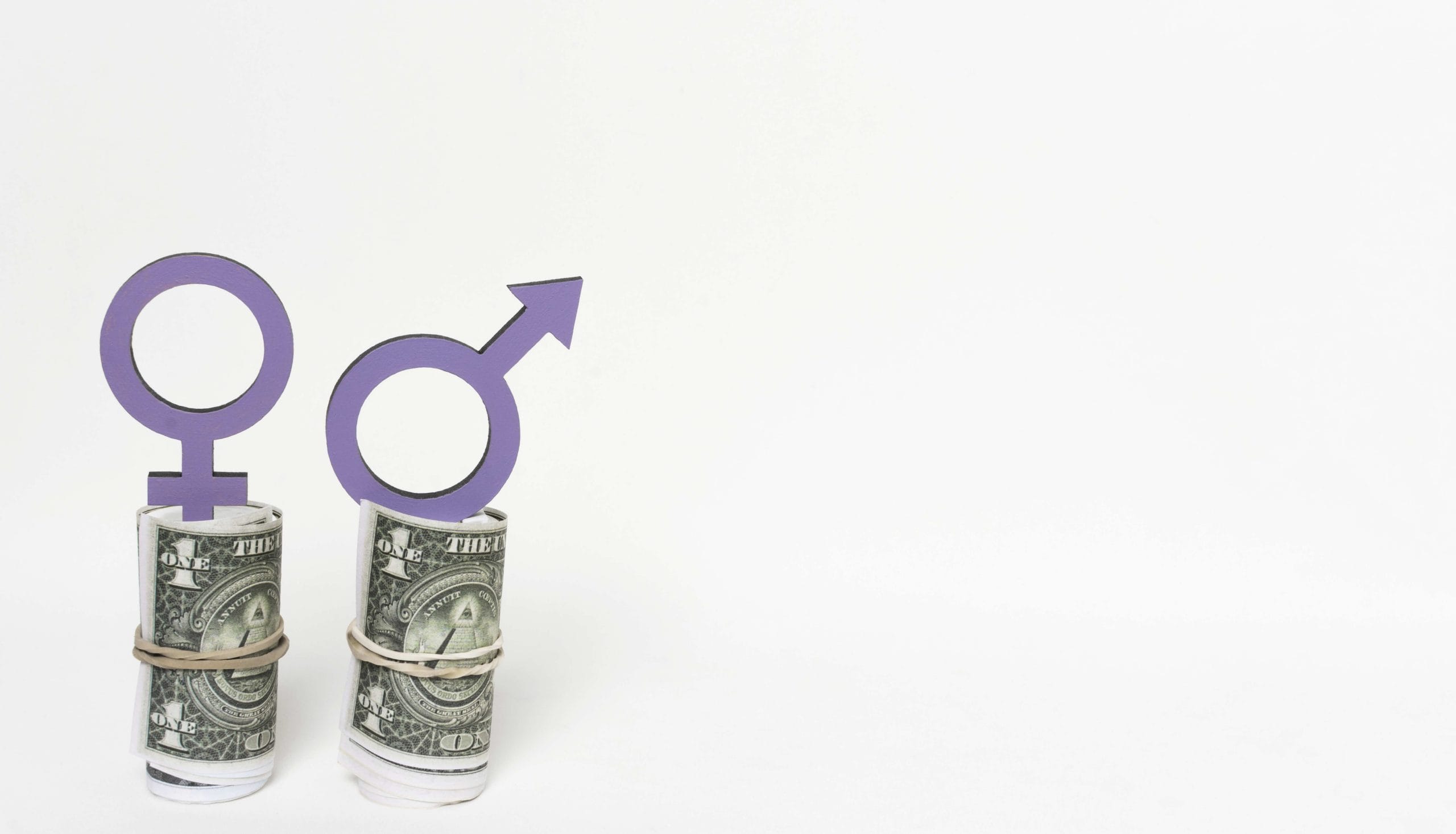
International Equal Pay Day, marked on 18 September, was first observed in 2020. In the sixth year since the United Nations proclaimed the day to draw attention to the principle of equal pay for work of equal value, the picture still points to a significant gap.
According to 2026 data from the International Labour Organization, women in paid employment earn, on average, around 20 percent less than men globally. The gap widens further for women with children.
For this reason, equal pay is a far broader matter than comparing the payslips of two employees doing the same job.
From access to employment, to how occupations are distributed between women and men, to care responsibilities, promotion opportunities, pay-setting systems and transparency, different layers of working life play a role in producing this gap.
And the resulting picture isn’t only about women’s income. It is also directly connected to economic growth, labour force participation, poverty, social mobility and trust in institutions.
Not “Equal Work,” but “Work of Equal Value”
There is an important conceptual distinction for understanding the principle of equal pay.
The ILO’s 1951 Equal Remuneration Convention, No. 100, provides that women and men should receive equal pay not only for the same job, but for work of equal value.
This distinction matters.
Two people don’t need to hold the same title. Different jobs can be of equal value in terms of the skill, effort, responsibility and working conditions they require.
So the question is not only “do a woman and a man in the same position receive the same pay?”
It is also: by what criteria do we determine the value of jobs, and are those criteria genuinely neutral?
This is why the ILO’s comprehensive pay equity guidance, published in March 2026, treats objective job evaluation, pay transparency, social dialogue, labour inspection, care policies and the reduction of gender stereotypes as parts of the same policy framework.
What Do the Numbers Say?
The global average matters, but on its own it doesn’t tell the whole story.
The United Nations states that women worldwide earn approximately 20 percent less than men. In the health and care sectors, the gap rises to as much as 24 percent.
In the European Union, women’s average gross hourly earnings were 11.1 percent lower than men’s in 2024. The variation between countries is notable: 18.8 percent in Estonia, 18.5 percent in Czechia, 15.7 percent in Germany, compared with 0.7 percent in Belgium. It should also be noted that this Eurostat indicator measures the unadjusted pay gap; the figures alone are not, therefore, a direct measure of pay discrimination.
This variation shows us something else: wage inequality does not have a single cause, and therefore not a single solution.
The sector one works in, occupation, working hours, parenthood, care burden, career breaks, access to management positions and the structure of pay systems all combine to produce the outcome.
If the Law Exists, Why Does the Problem Persist?
One of the most striking data points of 2026 answers exactly this question.
The World Bank’s Women, Business and the Law 2026 study examines 190 economies not only through the laws in force, but also through the policies that support those laws and their effectiveness in practice.
The result is quite striking.
On the adequacy of legal regulations supporting women’s economic equality, countries score an average of 67 out of 100.
In the assessment of how these regulations are implemented, the score drops to 53.
On the policy and institutional mechanisms needed to translate rights into practice, the average is just 47.
Only 4 percent of women worldwide live in systems that come close to legal equality in economic opportunity.
A significant part of the equal pay debate lies exactly here.
A right being recognised in legislation is not the same thing as that right actually being exercised in working life.
The Link Between Equality and Development
Pay equity is sometimes assessed purely under the heading of social policy or workers’ rights. Yet its economic impact is far broader.
According to the World Bank’s 2026 assessment, removing the barriers women face in employment and entrepreneurship has the potential to increase global GDP by approximately 20 percent.
The reason for this is fairly clear.
When an economy cannot fully draw on the talents, education and productive capacity of half its population, the issue is not simply one of income distribution. Labour supply, productivity, the talent pool, entrepreneurship and growth capacity are all affected as a result.
For this reason, it is difficult to separate societal development from economic equality.
The conditions under which women are able to participate in economic life are also an important indicator of how a country’s laws, institutions, labour market and social policies function together.
Why Does Transparency Matter?
One of the factors that makes managing pay inequality difficult is information asymmetry.
An employee knows their own pay. But they often don’t know how the pay of colleagues doing similar or equally valuable work is determined, which criteria are used, or whether a systematic gap exists within the organisation.
For this reason, pay transparency has, in recent years, become one of the key tools of equal pay policy.
The European Union’s Pay Transparency Directive (EU) 2023/970 adopts this approach. The regulation introduces mechanisms such as making pay-setting criteria more visible, giving employees access to pay information, and requiring employers above a certain size to report on pay gaps.
The logic here matters: it is also difficult to manage an inequality we cannot measure.
Transparency does not, on its own, eliminate the existence of a pay gap. But it does make the gap visible, allows its causes to be examined, and enables corrective mechanisms to be put in place where needed.
Pay Inequality Is a Governance Matter
At this point, the issue changes shape for companies as well.
Equal pay policy cannot be treated solely as a matter for human resources or the legal department. How the pay system is designed, how jobs are evaluated, promotion criteria, performance measurement, management accountability and the channels through which employees can raise objections are all part of the same system.
What matters is not only what happens after a pay gap emerges, but whether mechanisms exist to prevent that gap from becoming systemic.
For companies, then, the questions that can be asked are fairly concrete:
Are pay-setting criteria clear?
Are jobs of equal value compared using objective criteria?
Are unexplained pay gaps monitored on a regular basis?
Are there safe channels through which employees can raise concerns about their pay?
Can disagreements that arise be addressed before they grow?
Where Does Mediation Come In?
Pay disputes have a distinctive character. In most cases, the working relationship between the parties continues.
For this reason, the issue may not only be about determining the amount of pay owed in the past. The employee’s trust in the organisation, their relationship with their manager, career expectations and future working conditions can all be part of the dispute.
In these kinds of disputes, mediation can offer the parties a space to consider not only their legal positions, but the broader working relationship behind the dispute.
But there is an important limit here.
Mediation should not become a confidentiality mechanism that papers over systematic pay inequality. Resolving an individual dispute does not remove the need to examine and address a structural pay gap, if one exists within the organisation.
The effective approach should therefore have two layers: transparent, measurable and auditable pay systems at the institutional level, and, where appropriate, early dialogue, negotiation and mediation mechanisms for individual disputes.
What 18 September Reminds Us
The principle of equal pay for work of equal value was adopted by the ILO in 1951.
Seventy-five years have passed since.
The fact that women worldwide still earn roughly 20 percent less in 2026 shows that the issue has less to do with the principle being accepted than with how its implementation is built.
Today we have more data, more advanced pay analysis, transparency regulations and stronger legal tools than ever.
But as the World Bank’s 2026 data shows, the distance between law, policy and practice remains wide.
International Equal Pay Day is, for this reason, not only a day that reminds us of the pay gap.
It is also an important date for looking at the extent to which an institution, a labour market, and ultimately a society, can translate equality into practice.
Sustainable Development Goals
Sources
United Nations, International Equal Pay Day.
International Labour Organization, Towards Pay Equity: A Comprehensive Response to the Gender Pay Gap, 2026.
World Bank, Women, Business and the Law 2026: Benchmarking Laws for Jobs and Inclusive Growth.
Eurostat, Key Figures on Europe 2026, Gender Pay Gap data.
OECD, Gender Wage Gap Database, 2026 update.
European Union, Directive (EU) 2023/970 on Pay Transparency.