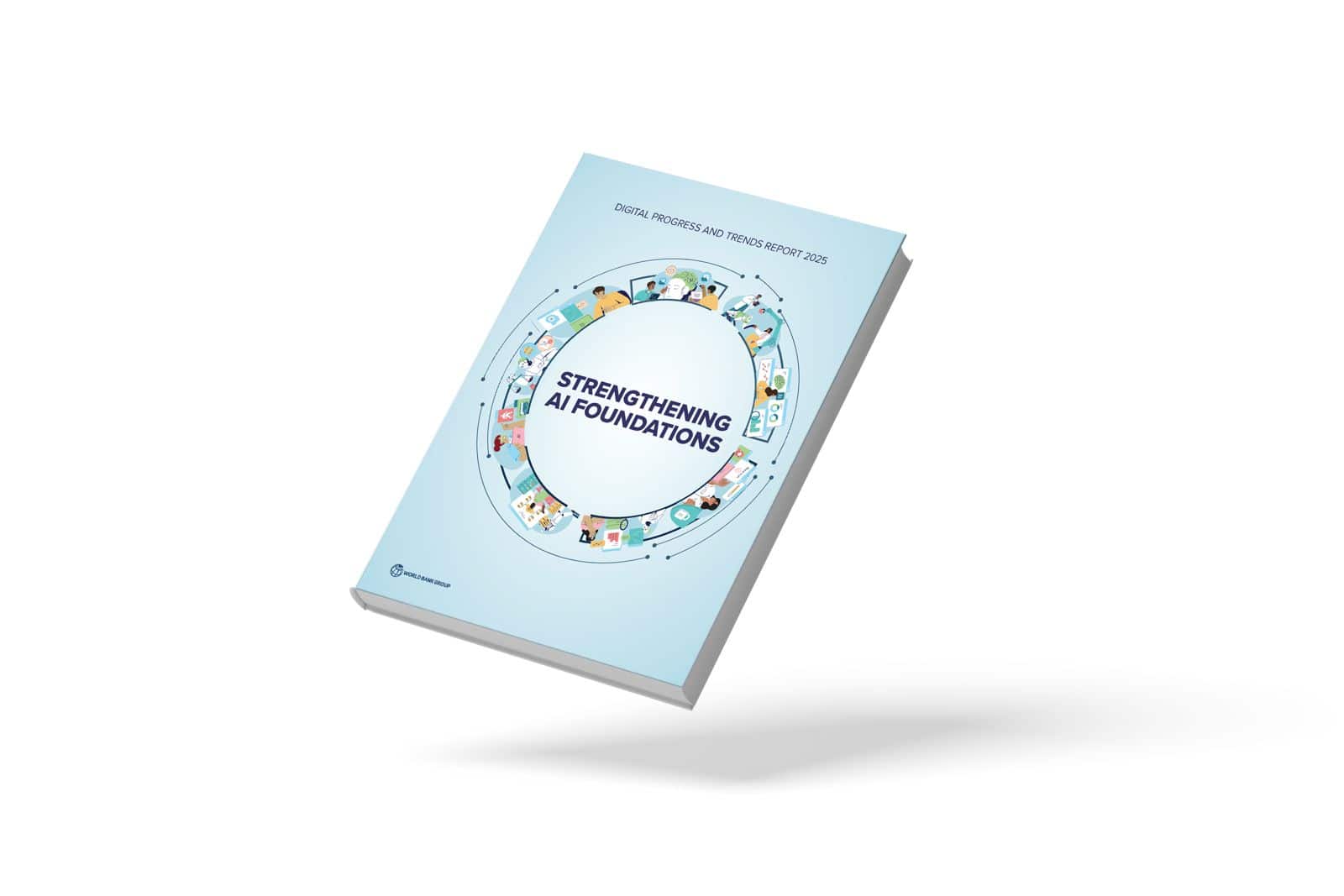
The World Bank’s 4C Strategy for 2025
Artificial intelligence is no longer just about technological advancement — it now lies at the heart of economic development and societal transformation. The World Bank’s Digital Progress and Trends Report 2025: Strengthening AI Foundations highlights how AI has evolved beyond being a high-tech R&D focus in advanced economies and is emerging as a practical development tool for low- and middle-income countries.
One of the report’s most striking findings is the growing impact of so-called “Small AI” solutions: low-cost, mobile-based applications that deliver rapid and accessible outcomes in sectors such as agriculture, healthcare, and education. These next-generation tools have the potential to create real value even in regions with limited traditional infrastructure. However, according to the World Bank, for this transformation to be inclusive, sustainable, and equitable, investment must go beyond technology itself — it must also target infrastructure, human capital, data ecosystems, and governance frameworks.
At the heart of the report lies a strategic framework built around four foundational pillars: Connectivity, Compute, Context, and Competency. These pillars reflect a broader vision of AI — not merely as a set of digital tools, but as a structural enabler of development in the 21st century.
Small AI: A Transformative Tool for Developing Countries
 Is it possible to harness the power of artificial in
telligence without access to expensive infrastructure, large-scale data centers, or advanced research labs? The World Bank’s 2025 report provides a clear answer: yes, it is — and this is not merely a theoretical claim. The report is supported by real-world examples already in practice across many developing economies.
Referred to as “Small AI”, these solutions offer fast and impactful transformation without requiring significant investment. Small AI encompasses applications that run on mobile devices, operate with low computing power, and are directly tailored to local needs. These technologies enable meaningful impact in key sectors — from health screening and agricultural monitoring to access to basic educational content and digital literacy training.
The report highlights three primary domains where Small AI is proving particularly effective: healthcare, agriculture, and education. For example, AI-powered mobile health tools can support frontline diagnostics in rural areas where access to specialist doctors is limited, playing a potentially life-saving role. In agriculture, satellite-based AI applications provide farmers with timely yield forecasts and irrigation advice. In the education sector, language recognition and adaptive learning tools enhance access to learning even in under-resourced schools.
What these solutions have in common is their ability to “do more with less.” By leveraging lightweight but high-impact technology, Small AI enables outreach to communities that have traditionally been excluded from digital transformation. Moreover, many of these tools are developed using open-source frameworks, allowing local developers to contribute, adapt, and scale solutions according to regional needs — a key step in reducing technological dependency and promoting localization.
However, for the full potential of Small AI to be realized, these tools must go beyond individual or pilot usage. They need to be integrated into institutional systems, sectoral strategies, and public service delivery models. Without this broader alignment, Small AI risks remaining a patchwork of isolated initiatives rather than becoming a systemic development driver.
Global AI Inequalities and the Expanding Digital Divide
 While artificial intelligence holds great promise for economic growth and efficiency, it also carries the risk of deepening existing global inequalities. According to the World Bank’s 2025 report, AI innovation, investment, and technical capacity are heavily concentrated in high-income countries. This concentration exacerbates the disadvantage already faced by countries with limited technological access, effectively extending the gap into the digital era.
The figures are striking: by 2025, 87% of all leading AI models, 86% of AI startups, and 91% of total AI investment are based in high-income economies. In contrast, low- and middle-income countries (excluding China and India) account for just 4% of global AI investment. Similarly, the vast majority of AI-related patents and academic publications originate in the Global North.
This disparity reflects more than just a technological imbalance — it mirrors broader economic and geopolitical power structures. Countries with advanced AI capacity continue to accelerate their growth, while those without are left further behind. In the long term, this not only undermines global development goals but also reinforces patterns of technological dependency.
The report also draws attention to stark inequalities in individual-level usage. By 2025, over 40% of traffic to widely used AI tools such as ChatGPT comes from middle-income countries, while low-income countries contribute to less than 1% of the traffic. The primary reasons: limited internet access, high device costs, and widespread digital illiteracy.
But the divide is not limited to usage alone. Compute capacity and data infrastructure further widen the gap. As of 2024, the number of secure internet servers in the United States is 200 times higher than the average in middle-income countries, and 20,000 times higher than in low-income countries. Similarly, while 5G coverage in high-income countries has reached 84%, the figure drops to just 4% in low-income nations.
This divide reflects not only who can access AI, but also who has the capacity to use, adapt, and govern it. The challenges are structural: in many countries, public institutions have yet to integrate AI tools effectively, and private sector actors often delay adoption due to lack of regulation, ethical frameworks, and data protection standards.
Ultimately, the report makes one thing clear: AI is not just about innovation — it is fundamentally about equity in access, power, and resources. Without deliberate interventions to ensure fairness, today’s digital divide risks becoming tomorrow’s digital chasm.
The Core Pillars of Artificial Intelligence: The 4C Model
The World Bank’s Digital Progress and Trends Report 2025 asserts that for AI to effectively contribute to inclusive and sustainable development, simultaneous investment is needed across four critical areas: Connectivity, Compute, Context, and Competency. This 4C framework is presented as the foundational infrastructure of artificial intelligence. A weakness in any one of these pillars not only limits the inclusiveness of technological transformation but also threatens the long-term viability of AI-powered applications in both public and private sectors.
1. Connectivity – Digital Access and Infrastructure
Connectivity is the most fundamental requirement for AI to function at any level. Internet access, energy infrastructure, and access to digital devices are key components of this pillar. Although global internet usage is on the rise, the report reveals deep disparities in terms of speed, cost, and quality of access across countries.
As of 2024, internet usage in high-income countries (HICs) stands at 93%, while in low-income countries it is only 27%. The divide becomes even more stark when examining data usage and 5G access. For example, 5G network coverage reaches 84% in HICs but falls below 4% in low-income nations. This gap not only affects individual connectivity but also influences critical sectors such as education, healthcare, public service delivery, and private sector digitalization.
2. Compute – Computational Power and Infrastructure
Training, deploying, and maintaining AI systems requires significant computational resources — including chips, servers, data centers, and cloud infrastructure. However, the global distribution of these resources remains highly uneven.
As of 2024, more than half of the world’s secure internet servers are located in the United States, while other high-income countries account for an additional 41%. That leaves only 9% of secure servers for all low- and middle-income countries combined. The report notes that the U.S. has 200 times more servers per capita than middle-income countries, and 20,000 times more than low-income countries. This disparity is not just a technical limitation; it is a structural inequity that determines who holds power in the global AI ecosystem.
3. Context – Local and Meaningful Data
Effective AI systems rely not only on computing power but also on high-quality, context-specific data. AI models that fail to reflect local languages, cultures, or societal structures risk generating bias and misinformation rather than delivering value.
The report emphasizes that a vast majority of online content remains in English, with relatively limited data being produced in local languages and cultural contexts in low- and middle-income countries. This restricts the relevance and usability of AI tools in these settings. Moreover, poorly diversified datasets can embed and reinforce social biases within AI algorithms. Encouraging local data production and increasing digital content diversity are essential steps for developing fair, inclusive AI systems.
4. Competency – Digital Skills and Human Capital
AI is not just about machines; it is about the people who build, use, and govern them. That is why human capital investment is a central theme of the report. Education, digital literacy, technical skills training, and lifelong learning initiatives all contribute to both individual empowerment and national AI readiness.
Between 2021 and 2024, the demand for GenAI-related skills grew by 16% in many middle-income countries. However, the availability of qualified professionals remains limited. The global brain drain — particularly in fields like software development and engineering — further exacerbates this gap. The report calls for urgent policy reforms to close the competency gap and ensure countries can develop and retain the talent needed for AI-enabled transformation.
Policy Recommendations and Strategic Messages: From AI to Social Benefit
 The World Bank’s Digital Progress and Trends
Report 2025 does more than assess the current state of artificial intelligence — it also offers a detailed set of policy recommendations on how countries can manage this technological transformation and integrate it into their broader development agendas. These recommendations are grounded in a central premise: AI’s potential to deliver social benefit can only be realized through planned, equitable, and long-term strategies.
1. Prioritize Strategic Investment in the 4C Pillars
One of the report’s clearest messages is that countries must invest in the 4C model — Connectivity, Compute, Context, and Competency — to become truly “AI-ready.” Key priorities include expanding public investment in digital infrastructure, improving energy access, encouraging local data generation, and promoting widespread digital skill development.
These pillars are not only crucial for technological advancement but also for shaping inclusive employment, equitable access to public services, and socioeconomic resilience. The report stresses that these investments must be integrated into national strategies — not just led by the private sector but coordinated and financed by governments as a matter of policy.
2. Reform Education Systems for Digital Competency
Current education systems, particularly in low- and middle-income countries, are often unprepared to meet the demands of the AI era. The report calls for the integration of digital competencies into curricula from an early age, the modernization of vocational training programs, and support for lifelong learning.
Special attention must be paid to women, youth, and rural populations — groups that are at risk of being excluded from digital transformation. Without targeted interventions, existing social inequalities may deepen further through digital exclusion.
3. Build Trusted and Inclusive Data Governance Frameworks
AI systems rely on diverse, accessible, and high-quality data — but the processes of data collection, storage, and use are fraught with risks related to ethics, privacy, and security. The report recommends that countries develop robust data governance systems that clearly define the roles and responsibilities of both public and private actors.
Additionally, policies that encourage local data production and cultural representation are essential. This is not only a technical need, but also a social and cultural imperative. For AI to effectively serve communities, it must be trained on data that reflect the realities and identities of those communities.
4. Promote Open-Source Tools and Regional Collaboration
Infrastructure alone is not sufficient to increase AI access in developing countries. The report emphasizes the importance of collaborative models such as open-source software, shared data repositories, and regional technology hubs. These mechanisms help reduce costs and facilitate technology transfer.
Cross-country collaboration can also foster joint training programs, knowledge exchange, and policy harmonization, strengthening not only technical capacity but also diplomatic and institutional cohesion.
5. Prepare for the Ethical and Social Implications of AI
The report’s final message is clear: the speed of technological innovation must not outpace our ethical and social preparedness. The integration of AI into decision-making processes introduces new societal risks — from algorithmic bias to lack of transparency and accountability.
To address this, countries must strengthen not only their technical infrastructure but also their governance capacity. The report recommends the creation of multi-stakeholder governance models, independent oversight bodies, and ethics councils to ensure that AI development remains human-centered, trustworthy, and socially responsible.
Artificial Intelligence for Development, Infrastructure for Justice
The World Bank’s 2025 report demonstrates that artificial intelligence (AI) is not merely a technological leap forward, but a paradigm shift that must be reexamined through the lens of global development and social equity. When supported by the right policies and infrastructure, AI can offer rapid and cost-effective solutions in fundamental sectors such as education, healthcare, agriculture, and public services. However, to fully realize this potential, countries must strengthen not only their access to technology but also their capacity to develop, govern, and adapt AI systems to local contexts.
The 4C model — composed of connectivity, compute, context, and competency — serves as a compass for ensuring that AI evolves in a fair, inclusive, and sustainable manner. The report highlights that structural disparities between high-income countries and the rest of the world are not just economic but also digital in nature and are deepening.
Thus, strategies around AI should not focus solely on technical capabilities. They must also address multi-dimensional policy areas such as education reform, data governance, open-source ecosystems, and ethical oversight. Without this broader vision, technological progress risks exacerbating inequality and centralizing developmental opportunities rather than expanding them.
ADRİstanbul’s Role in This Transformation
The World Bank’s 2025 report emphasizes that AI’s contribution to development goals requires not only technological foundations but also ethical and governance-based infrastructure. Accordingly, the complexities, tensions, and ethical dilemmas arising in digital transformation processes call for innovative, context-aware conflict resolution mechanisms.
ADRİstanbul supports institutions navigating the challenges of digitalization with ethical, secure, and sustainable solutions. As AI plays an increasingly influential role in decision-making processes, core principles such as privacy, transparency, and accountability become more critical. ADRİstanbul aligns its approach with these principles to help institutions manage this transformation with confidence and integrity.
Our areas of service include:
- Building internal trust and stakeholder communication during digital transformation and data management projects
- Designing ethical risk assessments and institutional governance systems
- Providing data ethics–based mediation and conflict prevention strategies
- Structuring digital mediation processes grounded in privacy, transparency, and accountability
- Consulting on the development of responsible digitalization policies
ADRİstanbul not only addresses digital disputes but also contributes to strengthening the ethical capacity of institutions. In doing so, we go beyond technical infrastructure and support organizations in evolving through a foundation of trust and responsibility.
Which Sustainable Development Goals (SDGs) Does This Article Support?




Frequently Asked Questions
1. What is “Small AI” and why does the World Bank emphasize this concept?
“Small AI” refers to artificial intelligence solutions that do not require high computing power or expensive infrastructure. These tools often run on mobile devices and are customized to meet local needs. The World Bank highlights how such tools can expand access to basic services — such as agriculture, education, and healthcare — especially in low- and middle-income countries. Small AI offers the potential to achieve high impact at low cost.
2. Why is the 4C model considered critical for AI development?
The 4C model — connectivity, compute, context, and competency — outlines the foundational pillars needed for AI to evolve in a fair and sustainable way. The report warns that imbalanced growth in these areas could lead to a new digital divide on a global scale. For example, countries lacking access to data centers or skilled labor are unable to fully benefit from AI technologies.
3. Why do some countries advance in AI while others fall behind?
Because AI is not just software. It also requires hardware (such as chips), data centers, high-speed internet, multilingual datasets, and skilled human resources. The report notes that more than 90% of AI-related investments are concentrated in high-income countries, while most others remain as users rather than producers of AI technologies.
4. What types of public policy recommendations does the report offer?
The World Bank emphasizes the need for governments to strengthen both public investment and governance capacity for digital transformation. Core recommendations include education system reform, effective data governance, open-source ecosystem support, and enhanced regional collaboration — all of which are key to promoting equitable access to AI.
5. Why is ethics and trust-based AI a core focus of the report?
The report stresses that AI systems must be built on public trust and ethical principles, not just technical capabilities. A lack of transparency, explainability, and accountability can erode public confidence and lead to harmful outcomes. That’s why the report advocates for ethical governance frameworks and robust oversight mechanisms.