Every era defines its rulers and institutions not only by the decisions they make, but by the perspective from which they see the world. While times may change, the central question at the heart of sustainable leadership remains the same:
“How can power be exercised in a way that endures?”
Today, the “Spirit of Dialogue” theme selected for the World Economic Forum’s Davos 2026 Summit offers one of the most contemporary responses to this question. Yet, the roots of this response lie much deeper — embedded in a historical memory that often goes unrecognized.
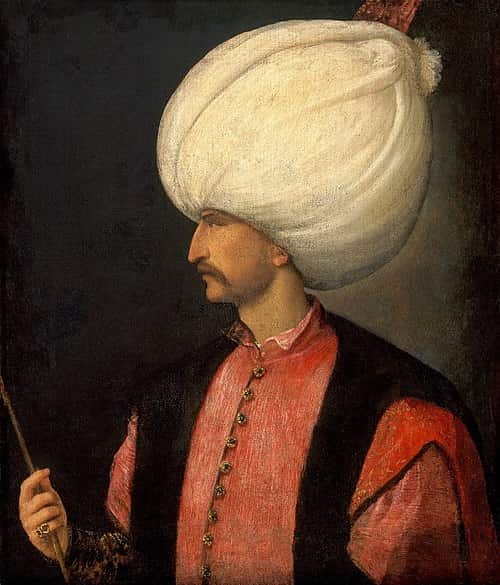
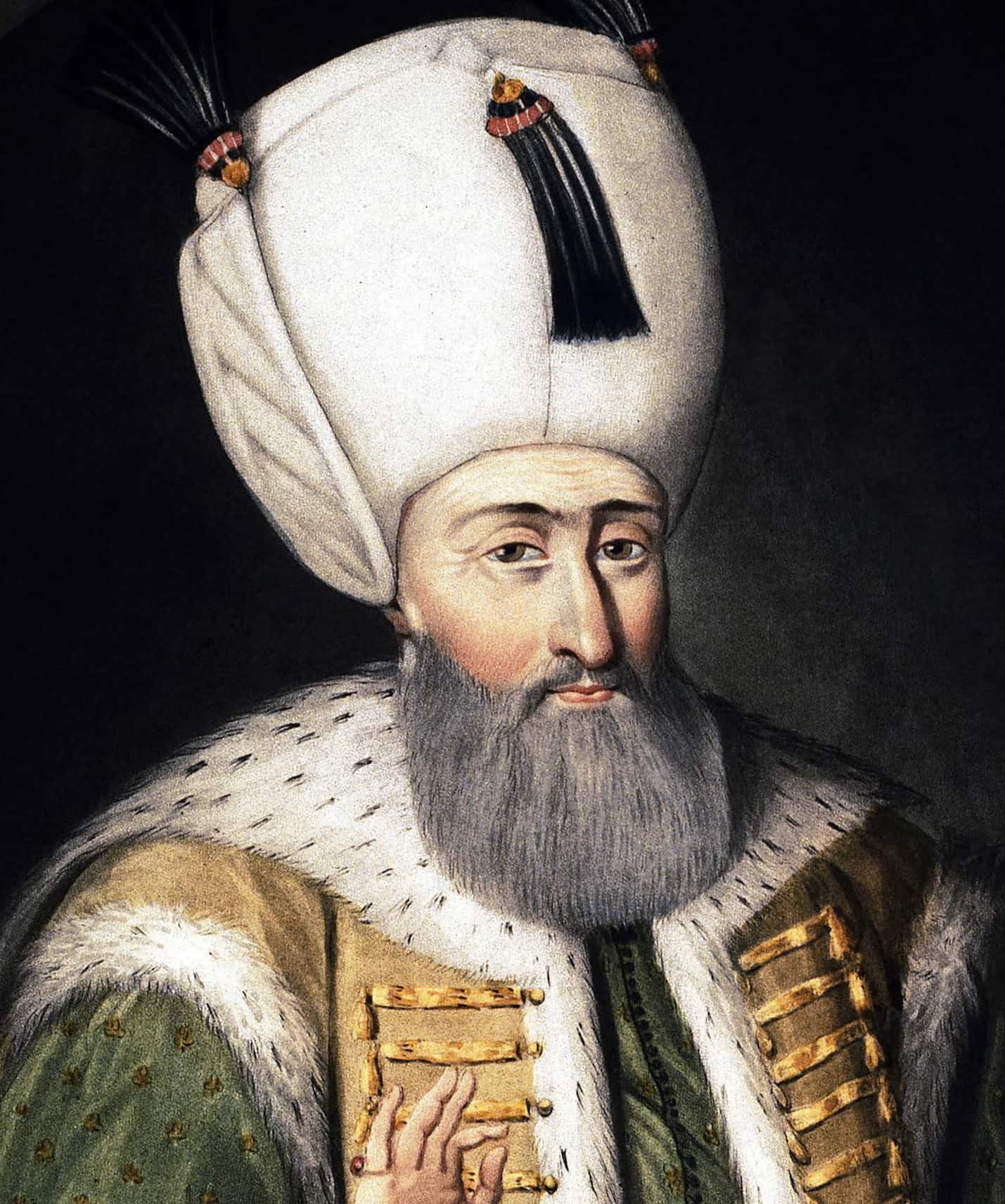
Centuries ago, during the height of the Ottoman Empire, Suleiman the Magnificent emerged as a ruler remembered not only for his military campaigns, but for his approach to decision-making, his structuring of statecraft, and his remarkable ability to hold together a multi-faith, multi-ethnic empire.
The order he built was not one of conflict, but of reconciliation, dialogue, and continuity.
Today, the word dialogue often appears in the language of global summits, diplomatic communiqués, or institutional vision statements. Yet in Suleiman’s time, this concept was not abstract — it was a governance practice, a leadership reflex, and a way of building culture that extended from the palace to the provinces.
That is precisely why the Spirit of Dialogue theme at Davos 2026 matters. It does not present a new idea, but rather reclaims an ancient value.
It speaks to a long-standing tradition that tells us leadership is not sustained through force, but through durability; not through dominance, but through inclusion.
 Direction, Not Decree: Kanuni’s Architecture of Order
 Direction, Not Decree: Kanuni’s Architecture of Order
History remembers certain leaders not merely for their power to rule, but for the sustainability of the order they establish. Suleiman the Magnificent stands among these rare figures. His leadership was not limited to the enactment of laws; it offered a direction, a conceptual framework for how those laws could give rise to a coherent and enduring social order.
In the sixteenth century, the Ottoman Empire was a vast, multi-ethnic, multi-faith, and multicultural polity spanning three continents. Governing such diversity required more than the consolidation of central authority. It demanded an approach that enabled different segments of society to see themselves as legitimate participants in a shared order.
This is precisely where Suleiman’s distinctiveness emerged.
He defined the strength of the state not through territorial reach alone, but through the stability of the relationship it maintained with society.
For Suleiman, justice was not merely a judicial procedure. It functioned as an architecture of balance in which the voices of individuals and communities could be acknowledged. This understanding generated a shared language of governance extending from the imperial center to the provinces. Decisions were not imposed solely through top-down commands, but shaped through engagement with local structures. In doing so, the system fostered trust, continuity, and participation as core elements of governance.
Within the legal framework of the period, shar‘i and customary (örfi) law operated in tandem. What truly mattered, however, was how this balance was maintained. Suleiman’s close collaboration with Sheikh al-Islam Ebussuud Efendi transformed this equilibrium into an institutionalized structure. While one pillar represented religious legitimacy, the other safeguarded political and social order. Together, they produced not only legal norms, but a durable culture of governance.
Suleiman’s legacy, therefore, is not confined to law alone. It represents a leadership tradition grounded in listening, balance, and institutional restraint.
From this perspective, his reign continues to illuminate contemporary debates on governance. The oft-cited maxim “Justice is the foundation of the state” was not merely a rhetorical principle in his era; it was a lived model of leadership.
The Silent Power of Dialogue: The Culture of Sulh and the Statecraft of the Ottoman Empire
In the Ottoman political tradition, the term sulh (meaning peace or reconciliation) represented more than a formal agreement—it was the embodiment of a governance philosophy. During the reign of Suleiman the Magnificent, sulh was neither a passive retreat nor a temporary tactic of compromise. Rather, it served as a meticulously crafted mode of governance that established and sustained long-term state stability.
Sulh was not used to suppress dissent but to repair the social fabric and reinforce the bonds connecting diverse groups. Suleiman actively implemented this approach in provincial administration, particularly where ethnic, religious, and economic differences might give rise to tension. In this structure, judges (kadıs), local leaders, and tax officers were not merely executors of imperial orders; they were mediators who could communicate in the local idiom and maintain the ground for consensus.
This system reflected not the coercive capacity of centralized power, but the strategic intelligence of institutions.
Thanks to the culture of sulh:
- Different communities and faiths could coexist within their own traditions,
- Economic order was maintained without disruption,
- Local issues were often resolved without escalating to formal court proceedings.
In contemporary terms, these sulh-based practices were:
- Less about conflict resolution and more about proactive system design,
- A transformation of dialogue from a tool into the very language of governance,
- Focused not on confrontation, but on coexistence and sustained collaboration.
This approach underpinned not only social peace, but also the reputation and durability of the state.
Because the true strength of a government is measured not by how frequently it punishes, but by how effectively it manages crises before they escalate.
The same principle that applies to institutions today was already relevant in Suleiman’s time:
Good governance is not defined by how power is used, but by when it is deliberately withheld.
From Grandeur to Trust: The Aesthetic Language of Governance

When one thinks of Suleiman the Magnificent, the first images that often come to mind are the silhouette of the Süleymaniye Mosque, the grandeur of palace protocol, or the refined verses of the Divan of Muhibbi, his poetic pseudonym. Yet these were not merely cultural expressions—they were elements of a broader governance strategy.
For Suleiman, aesthetics was not a display of superiority; it was a medium for initiating dialogue, building relationships, and deepening legitimacy.
Architecture: A Silent Arena for Dialogue
The works of Mimar Sinan were not just physical structures; they were spaces that evoked a sense of public trust and imbued shared meaning into the built environment. Süleymaniye was more than a mosque—it was a designed way of life, incorporating institutions like a madrasa, hospital, and soup kitchen. What was built was not just stone and mortar, but the institutional foundation of coexistence.
Poetry: Softening the Language of Power
Writing under the pen name Muhibbi, Suleiman did more than explore personal expression. His poetry served to narrow the distance between ruler and society, transforming emotional intelligence into a form of governing virtue. Through the aesthetic expression of justice, fate, love, and spiritual surrender, his verses fostered a sense of intimacy between the state and its people.
Representation: Establishing Dialogue Through Image
During Suleiman’s reign, diplomatic delegations did not merely deliver political messages. Every detail—from textiles to manuscripts, ceremonial protocols to gifts—was designed to convey the Ottoman Empire as not just a powerful force, but a refined, graceful, and trustworthy actor. This form of representation aimed not at dominance, but at resonance with others.
Today, strategies such as diplomacy, public communication, institutional culture, and customer experience are shaped by similar principles. What Suleiman achieved was a comprehensive aesthetic vision of governance. Power was not only to be felt—but to be seen, touched, and shared.
Aesthetics is not the ornament of sovereignty—it is the instrument of sustainability.
Suleiman the Magnificent infused this principle into every layer of the state.
And even today, institutions, brands, and governments may find themselves returning to one timeless question—rooted in his legacy:
“Are they simply listening to you, or are they building a connection with you?”
 Davos 2026: The Historical Roots of the Spirit of Dialogue
 Davos 2026: The Historical Roots of the Spirit of Dialogue
The 2026 World Economic Forum in Davos did more than set an agenda with its theme “The Spirit of Dialogue” — it redefined a philosophy of governance. Yet this concept is not a modern invention born out of today’s crises. Throughout history, dialogue has not only served as a tool for communication, but as a strategy for legitimacy, balance, and sustainability.
One of the most powerful historical examples of this strategy is the reign of Sultan Suleiman the Magnificent.
What Does the Spirit of Dialogue Represent?
The “Spirit of Dialogue” is a call for multi-layered governance. It represents:
- Viewing differences not as threats but as sources of richness,
- Exercising power not as domination but as relationship-building,
- Governing not just by making decisions, but by co-creating meaning.
This mindset also deeply characterized Suleiman’s leadership. Governance in his era was not merely about legislating — it was about sustaining social fabric, enabling enduring economic and civic relations, and integrating law with culture on the same platform.
A Line from Suleiman to Davos
The issues discussed on the Davos stage today — global inequalities, social polarization, fragile trust dynamics — had their historical counterparts across the diverse imperial geography of the 16th century. Suleiman addressed these challenges:
- Not through centralized imposition, but through negotiation with local actors,
- Not with punishment, but through reconciliation and representation,
- Not with the language of domination, but through law, aesthetics, and compassion.
This approach gives today’s idea of dialogue-driven leadership a much older -and richer- historical lineage.
Principles Remain, Even as Times Change
Davos 2026 calls on global leaders to embrace listening, empathy, and constructive solution-building. This is not a new ambition — it aligns with values practiced five centuries ago under Suleiman’s rule:
Power is not sustained by law alone, but by legitimacy.
And legitimacy is not built by force, but by dialogue.
Thus, Suleiman is more than a historical figure — he stands as a source of inspiration for today’s leadership challenges.
Dialogue as a New Definition of Power

The concept of power is evolving. Sovereignty is no longer defined solely by control, but by the capacity to foster sustainable relationships, lead through listening, and preserve systems under pressure. In this context, dialogue is not an alternative to power — it is its most advanced form.
Suleiman’s Silent Transformation
Suleiman the Magnificent was among the earliest architects of this transformation. The system he cultivated was not simply legislative; it was relational, responsive, and preemptive. Dialogue was not seen as an extension of justice but as a pillar of governance. And it was designed to uphold social balance alongside legal structure.
The Davos Invitation: From Past to Future
The “Spirit of Dialogue” theme of Davos 2026 is more than a contemporary governance vision — it is a call for historical continuity. The culture of speaking “at the right time, in the right setting,” once central to the Ottoman model, has become a condition for institutional survival in the modern world — not merely a method of dispute resolution.
Dialogue for the Leadership of Tomorrow
For today’s executives, public leaders, global institutions, and community organizers, the true responsibility is not the capacity to exercise power — but the wisdom to foster dialogue. Because:
- Not silence, but speech;
- Not imposition, but negotiation;
- Not dominance, but legitimacy;
- Not victory, but balance — these will define the leadership of the future.
And the roots of this vision lie in a centuries-old system of governance — in the justice- and reconciliation-oriented legacy of Sultan Suleiman the Magnificent.
References
- İnalcık, Halil. Devlet-i Aliyye: Osmanlı İmparatorluğu Üzerine Araştırmalar I. Türkiye İş Bankası Kültür Yayınları, 2009.
- → Inalcik, Halil. The Ottoman Empire: The Classical Age 1300–1600. Phoenix Press, 2001.
- Uzunçarşılı, İsmail Hakkı. Osmanlı Devleti’nin Saray Teşkilatı. Türk Tarih Kurumu Yayınları, 1988.
- Kafadar, Cemal. Kim Var İmiş Biz Burada Yoğ İken. Metis Yayınları, 2009.
- Peirce, Leslie. Morality Tales: Law and Gender in the Ottoman Court of Aintab. University of California Press, 2003.
- Hathaway, Jane. The Arab Lands under Ottoman Rule, 1516–1800. Routledge, 2008.
- Goffman, Daniel. The Ottoman Empire and Early Modern Europe. Cambridge University Press, 2002.
- Mutlu, İbrahim. “Osmanlı’da Sulh Kültürü ve Hukuki Anlamı.” İslam Hukuku Araştırmaları Dergisi, Cilt 19, 2012.
- Sönmez, M. Fatih. “Osmanlı Yönetişim Anlayışı ve Modern Kamu Yönetimine Etkileri.” Kamu Yönetimi Dergisi, 2016.
- Benda-Beckmann, Franz von. Dispute Resolution: ADR and Beyond. Kluwer Law International, 2006.
- Sander, Frank E. A. “Alternative Dispute Resolution in the Law School Curriculum.” Journal of Legal Education, 1995.
- Menkel-Meadow, Carrie. Dispute Resolution: Beyond the Adversarial Model. Aspen Publishers, 2021.
- Bush, Robert A. Baruch & Folger, Joseph P. The Promise of Mediation: The Transformative Approach to Conflict. Jossey-Bass, 2010.
- World Economic Forum. “Davos 2026: Spirit of Dialogue Theme Overview.”
- https://www.weforum.org (Erişim tarihi: Ocak 2026)
- Trust and Public Policy: How Better Governance Can Help Rebuild Public Trust. OECD Publishing, 2017.
- Karpat, Kemal H. Osmanlı Modernleşmesi: Toplum, Kurumsal Değişim ve Nüfus. İletişim Yayınları, 2012.
- Bozkurt, Gazi. Türk Hukuk Tarihi. Turhan Kitabevi, 2008.