Could the Brazil Summit Become a New Threshold in the Global Climate Struggle?
The COP30, to be held in Belém, Brazil in November 2025, is no ordinary climate diplomacy summit. For the first time since the Paris Agreement was adopted, countries will gather to globally assess whether the promises they made have been turned into real action.
This summit also coincides with a time when the impacts of the climate crisis can no longer be postponed. Taking place in the heart of the Amazon, COP30 represents a turning point where nature-based solutions, climate justice, finance, and implementation are intensifying. At a time when the global system is shaken both politically and economically, climate promises must now evolve into real policies and tangible actions.
COP30 is not merely a platform for discussing new goals; it is a moment of reckoning for the past and a decisive point for shaping the future.
How Did COP29 End?
COP29, hosted by Azerbaijan in 2024, made progress on certain fronts but largely fell short of expectations. The most notable development was the implementation of the long-debated Loss and Damage Fund. This fund aims to provide financial support to countries that are most affected by the climate crisis yet least responsible for it. However, the initial allocation of $250 million fell far short of the actual need.
Another important outcome was the goal of providing $300 billion annually in climate finance to developing countries by 2035. Although this seemed like a positive step, it remains well below the $1.3 trillion figure identified by scientists and policymakers as necessary. Critical questions such as how the funds will be raised, by whom, and in what proportion, remained unanswered.
Additionally, COP29 failed to produce a clear commitment to the gradual phase-out of fossil fuels. The influence of petro-states and energy lobbies weakened decisions about the future of fossil energy. For this reason, many experts viewed COP29 as a summit that laid the groundwork for some overdue but necessary decisions — yet lacked clarity and decisiveness in implementation.
What Is Expected from COP30?
To be held in Belém, Brazil, in 2025, COP30 represents a turning point that is both symbolic and strategic. Known as the gateway to the Amazon rainforest, this city embodies the tangible connection between nature and climate. For this reason, COP30 is expected to focus not only on greenhouse gas targets but also on nature-based solutions and just transition mechanisms.
Another key item on the agenda is NDC 3.0 — the new round of Nationally Determined Contributions for the 2025–2035 period. Current commitments are putting the world on a path toward 3°C of warming, whereas the Paris Agreement’s goal is to limit it to 1.5°C. COP30, therefore, marks a critical moment for countries to revise and strengthen their climate targets. So far, only a little over 60 countries have submitted their updated NDCs, but this number is expected to rise by the time the summit begins.
Moreover, COP30 is being described as the “implementation COP” for good reason. It will serve as a checkpoint to assess whether previous commitments are being translated into real action. Key themes include climate finance, food system transformation, nature-based solutions, halting deforestation, and greater engagement of the private sector.
Finally, Brazil’s emphasis on Indigenous Peoples’ participation positions COP30 as a potentially more inclusive and grassroots-focused negotiation platform. However, the country’s own fossil fuel policies may cast a shadow over this promise of inclusivity.
 Breaking Points: Key Issues on the COP30 Agenda
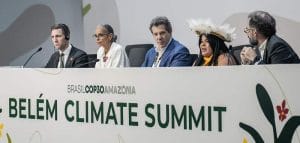 Breaking Points: Key Issues on the COP30 Agenda
As the world heads into COP30, several contentious topics are putting climate diplomacy to the test. These issues will not only shape the success of the summit but also define the trajectory of climate action leading up to 2030:
1. Climate Finance: A $1.3 Trillion Gap
Developing countries need approximately $1.3 trillion annually to effectively address climate change. However, at COP29, developed nations pledged only $300 billion. That leaves over $1 trillion in unresolved funding. How will this gap be filled? What role will the private sector play? Will investments be structured as grants or loans?
2. The Future of Fossil Fuels
COP28 called for a phase-out of fossil fuels, but no concrete roadmap was established. At COP30, the stance of fossil fuel-dependent economies like Brazil will be closely scrutinized. New drilling permits and increased oil production may undermine the credibility of the summit and raise questions about political consistency.
3. Nationally Determined Contributions (NDC 3.0)
In the current NDC 3.0 cycle, covering the 2025–2035 period, countries are expected to present more ambitious climate goals. However, the submissions so far fall significantly short of the 1.5°C target. Setting realistic yet impactful goals will be one of the most critical success factors for COP30.
4. Participation of Indigenous Peoples and Local Communities
Brazil has branded COP30 as an “inclusive COP.” The meaningful participation of Indigenous Peoples, rural communities, and young climate activists will be key to the summit’s inclusivity. Yet, how far this vision translates into actual practice remains uncertain.
5. Nature-Based Solutions and the Future of the Amazon
The Amazon Basin is one of the planet’s largest carbon sinks. Rising deforestation rates make it one of COP30’s most symbolic battlegrounds. Funding mechanisms for nature conservation — especially new initiatives like “Tropical Forest Forever” — are being closely watched to see if they can move from promise to implementation.
Climate Justice and the Inclusivity Test of COP30
COP30 is not merely a technical negotiation over climate targets—it also represents a pivotal moment in the pursuit of climate justice. Those most affected by the climate crisis — Indigenous Peoples, rural communities, women, and youth — are often excluded from decision-making processes. When this happens, climate policies risk remaining superficial, with no tangible impact.
Brazil’s call for “motirõ”, a concept from Tupi-Guarani meaning collective action, is intended to shape the summit with a more inclusive vision. Yet, this inclusivity will be tested on the ground: Will Indigenous Peoples have meaningful representation in the negotiations? Will community-based solutions become part of national climate strategies?
At the same time, the host country Brazil’s own environmental track record raises questions. New oil exploration permits in the Amazon, violence against environmental defenders, and ongoing tensions over Indigenous land rights could undermine the credibility of the summit. COP30’s “nature- and people-centered” approach cannot be assessed in isolation from these contradictions.
Climate justice is not only about compensating those who suffer the most. It is also about meaningful participation in decision-making and ensuring equal influence in shaping the future. For this reason, COP30 will be a test not just of how the climate crisis is managed, but also of democracy and representation on a global scale.
From Promises to Action: Can COP30 Deliver?

One of COP30’s defining features is its focus on implementation—not just new commitments but evaluating the feasibility of existing promises. For this reason, many observers are referring to it as “the Implementation COP.” The central issue is no longer how ambitious the targets are, but rather how and when they will be put into action.
In the decade since the Paris Agreement, countries have demonstrated highly varied performances in reducing greenhouse gas emissions. As many nations prepare to submit updated Nationally Determined Contributions (NDCs), the key question becomes: What enforcement and accountability mechanisms will support these pledges?
For the first time, the summit will include detailed discussions on implementation capacity, monitoring systems, transparency frameworks, and mechanisms of accountability. Countries are expected not only to declare their targets but also to specify which policies and actions they will implement to achieve them.
The role of the private sector is also becoming increasingly central. Many global companies are voluntarily committing to reducing carbon emissions, adopting circular economy practices, and investing in nature-based solutions. However, the lack of coordination and measurable indicators weakens the impact of these efforts. COP30 is expected to provide a clearer and more comparable accountability framework for the private sector.
Likewise, empowering local governments, cities, NGOs, and community-based initiatives in climate policy will be essential for building broad-based legitimacy in this new phase of implementation.
The success of COP30 will not be measured by the number of new promises made, but by whether existing commitments are trackable, accountable, and equitably implemented. As such, “implementation” is not just a technical term — it is poised to be one of the summit’s most politically charged and fiercely debated themes.