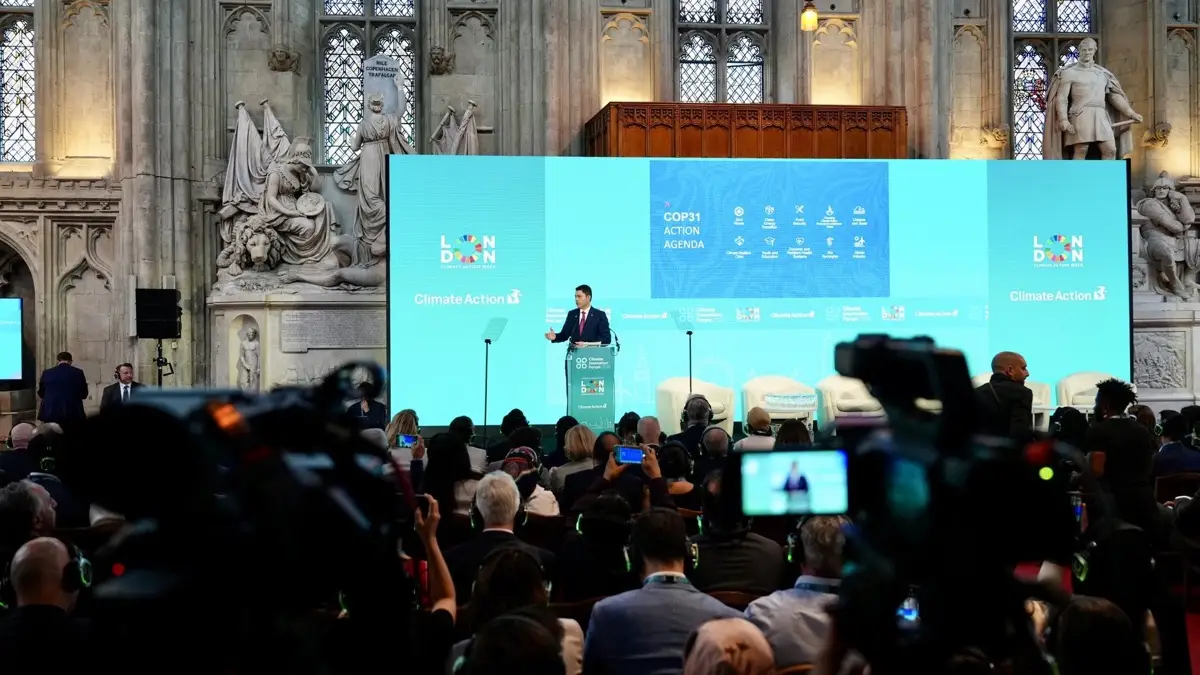
The UN Climate Summit taking place in Antalya in November 2026 marks both a diplomatic milestone and a new area of responsibility for Turkey. In this article, we answer all the questions surrounding COP31.
What is COP?
COP is an acronym for “Conference of the Parties” and serves as the supreme decision-making body of the United Nations Framework Convention on Climate Change (UNFCCC). Countries that signed this framework convention, adopted at the 1992 Rio Summit, have gathered annually since 1995 in a different host city to negotiate climate policy.
COP meetings are the universal platform where governments, the scientific community, business, and civil society make decisions on global climate action, clarify commitments, and monitor implementation. The most consequential outcome to date remains the Paris Agreement, adopted at COP21 in 2015.
When and where will COP31 take place?
COP31 will be held at the Antalya EXPO Center from 9 to 20 November 2026. The World Leaders’ Summit will take place on 11-12 November in Antalya, hosted by President Recep Tayyip Erdogan.
Participation will be broad: heads of state and government, ministers, negotiators, business representatives, civil society, and international media will all converge on Antalya.
 How is Turkey managing COP31?
 How is Turkey managing COP31?
COP31 is being conducted through a cooperation model between Turkey and Australia that is unprecedented in COP history. According to the official UNFCCC document, the Turkey-Australia Partnership Modalities, roles are divided as follows:
Turkey, as the host country, has signed a Host Country Agreement with the UNFCCC; it assumes all operational and logistical responsibilities for the conference; it is responsible for the COP31 Action Agenda; and it holds the authority to appoint the UN High-Level Climate Champion.
Australia, by contrast, is appointed by the COP31 President as the “President of Negotiations” and in that capacity holds exclusive authority over the negotiation process; it shapes the agenda items, prepares draft texts, and manages the process through which final decisions are reached.
The COP31 President is Minister of Environment, Urbanization and Climate Change Murat Kurum. Australia’s Minister for Climate Change and Energy Chris Bowen serves as President of Negotiations and has also been appointed COP31 Vice-President. Turkey’s Chief Climate Negotiator and Deputy Minister of Environment, Urbanization and Climate Change is Fatma Varank. The COP31 High-Level Climate Champion is Samed Agirbaş, President of the Zero Waste Foundation.
Unlike previous COPs where the host and negotiating roles were separated due to logistical constraints, this model represents the first deliberately designed structural partnership in COP history.
What processes took place ahead of COP31?
The COP31 preparatory process is not limited to a single summit. The SB64 technical negotiation conference held in Bonn, Germany in June 2026 served as a bridge between COP30 and COP31. In Istanbul, Minister Kurum hosted two days of opening consultations attended by UNFCCC Executive Secretary Simon Stiell, COP30 President Andre Correa do Lago, and the Australian delegation, during which COP31’s vision and action agenda were put on the table.
There is also a Pre-COP meeting: it will be held in Fiji from 5 to 8 October 2026, running alongside a special leaders’ event in Tuvalu focused on the climate impacts facing island states.
What is the main theme of COP31?
COP31 is officially described as the “Implementation COP.” The core objective is to close the gap between multilateral commitments and real-world implementation. The first Global Stocktake revealed a significant distance between Paris Agreement targets and actual transformation. COP31’s mission is to narrow that distance through concrete mechanisms.
Turkey has adopted three core values: dialogue, consensus, and action. The slogan is “The COP of the Future.”
Minister Kurum’s words in Bonn capture this approach: “The world today is not waiting for new decisions. The world wants to see that the decisions already made are being put into action.”
What is on the COP31 agenda? What are the 10 priority themes?
Minister Kurum announced the 10 priority themes of the COP31 Action Agenda at the Bonn conference in June 2026. The themes shared with the public are: zero waste and methane reduction, clean energy and electrification, food security, green industrialization, oceans, resilient cities, youth participation, health systems, and nationally determined contributions (NDCs). While the vast majority of the priority themes have been shared publicly in official announcements, the details of some headings continue to be finalized throughout the COP31 preparatory process.
Across all these themes, finance, technology transfer, and capacity building are treated as cross-cutting priorities.
What are the global targets of COP31?
A portion of the global implementation targets was shared with the public during the Bonn process; the final framework is expected to be completed in Antalya. The announced targets are: a global electrification rate of 35 percent by 2035, a 50 percent reduction in waste generation, a 25 percent reduction in energy use intensity in buildings, and a 15 percent increase in circular material use in industry.
What was inherited from COP30?
COP30 took place in Belem, Brazil from 10 to 21 November 2025. The rulebook for UN climate negotiations is now complete; the Belem process became a symbol of the shift from rule-making to implementation.
Countries agreed to mobilize at least USD 1.3 trillion per year in climate finance from all sources by 2035, to triple adaptation finance by 2035, and to operationalize the replenishment cycles of the loss and damage fund.
Yet the most significant gap was not closed: no clear and binding commitment on phasing out fossil fuels was reached. The language did not advance beyond the COP28 commitment to a “just, orderly, and equitable transition away from fossil fuels.” This gap is one of the heaviest items carried forward to COP31.
COP31’s task is to move these commitments from paper to the field.
What does the world expect from COP31?
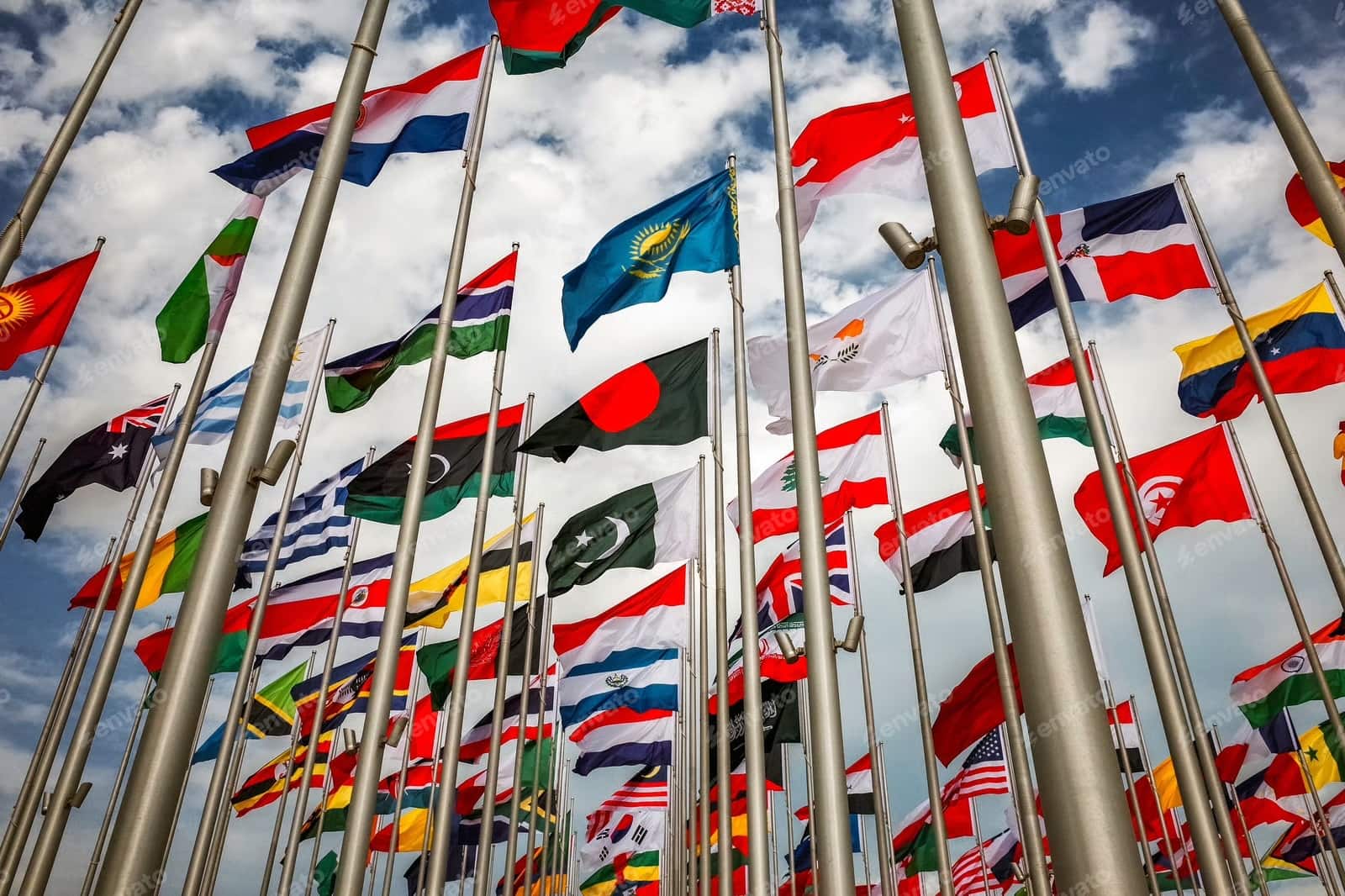
Expectations concentrate on three axes.
First, finance: developing countries expect climate finance commitments made in Paris to be translated into concrete mechanisms. The refusal of developed countries in Bonn to allocate funds for the Just Transition Mechanism has further sharpened this tension.
Second, NDCs: countries are expected to submit more ambitious Nationally Determined Contributions. Current commitments would reduce global emissions by only 12 percent by 2035, whereas the reduction required to stay within 1.5 degrees Celsius is 55 percent.
Third, implementation: the world wants to see concrete progress and accountability mechanisms demonstrating that pledges are actually being delivered.
From civil society, a far harsher warning is emerging: if the deadlocks are not resolved, COP31 risks becoming an empty talking shop that produces no real action.
Where does the United States stand in this process?
The Trump administration withdrew the United States from the UNFCCC on 7 January 2026, making the US the first and only country in history to leave this framework convention. This development significantly increases pressure on global climate finance and collective commitments, and represents one of the most critical elements of the backdrop for COP31 negotiations.
Why is Turkey’s hosting significant?
Turkey’s COP31 hosting cannot be considered separately from its geographical position. UN Turkey Resident Coordinator Dr. Babatunde Ahonsi emphasized that Turkey connects east and west, north and south; that it bridges Europe with the Middle East and Africa; and that this bridge position will be reflected positively in the COP31 negotiations. The same official also noted that Turkey’s experience gained through dialogue and mediation on international issues will contribute to the Antalya process.
Turkey is also located in the Mediterranean basin, one of the regions where the climate crisis is most directly felt. Drought, forest fires, and water stress are everyday realities of this geography. The Mediterranean is warming faster than the global average. Hosting COP31 offers an opportunity to bring these realities to the global negotiating table.
What does Turkey’s own climate policy record look like?
Turkey ratified the Paris Climate Agreement through a parliamentary decision in 2021 and subsequently announced its 2053 Net Zero Emissions target and Green Development Revolution vision.
On the other hand, civil society organizations have voiced criticism that current energy policies are not consistent with the stated climate targets. Ninety-four civil society organizations from Turkey and Australia submitted a joint letter to the COP31 Presidency calling for an immediate moratorium on new coal projects and the submission of an NDC consistent with 1.5 degrees Celsius. This tension reflects the complex picture that comes with Turkey’s dual position as both host and party.
What does COP31 mean for institutions in Turkey?
COP31 taking place in Turkey is not merely a diplomatic achievement. As interest from international financial institutions and climate funds grows, new investment opportunities are opening up in clean energy and climate finance. Renewable energy, sustainable urbanism, and climate adaptation projects are being placed more forcefully on the agenda.
This landscape also has direct implications for companies and institutions in Turkey in terms of corporate sustainability reporting, ESG compliance, and climate-related disputes.
Why is COP31 a matter of dispute resolution?
COP31’s framing as the “Implementation COP” brings with it a new landscape of disputes. As ESG standards are strengthened, unmet emissions commitments, inadequate environmental disclosures, greenwashing claims, and disagreements over how just transition processes should be managed are multiplying rapidly. These are not technical violations; they are crises of legitimacy and trust.
Trust crises cannot be resolved by court rulings alone. As Changaroth and Rahman demonstrated on the Commonwealth Lawyers Association platform, in climate disputes a court can clarify obligations but it cannot repair systemic and intergenerational harm. The Urgenda and Shell cases showed this: courts issued decisions, but relationships and long-term compliance mechanisms remained unanswered.
Mediation, facilitation, and restorative justice approaches that come into play at this point are not merely legal instruments; they are emerging as constructive dialogue mechanisms that build a foundation of trust between parties.
Where does ADRIstanbul stand in this landscape?
COP31 taking place in Turkey places the connection between climate and dispute resolution on concrete and urgent ground for us. This landscape is directly relevant in three respects.
First, corporate ESG disputes: investor demands, supply chain tensions, environmental impact disagreements, and greenwashing claims can be resolved far less destructively through structured dialogue processes.
Second, multi-party disputes: climate conflicts frequently involve more than two parties. Facilitation models that take into account the interests of states, companies, local communities, and future generations are beginning to play a decisive role in this space.
Third, Turkey’s mediation identity: as the UN itself has emphasized, Turkey is a bridge country. This identity opens up a distinct space in which Turkish mediators can position themselves in international climate negotiations and dispute processes.
COP31 is not merely a hosting opportunity for Turkey; it is a chance to build new capacity in the fields of climate diplomacy, sustainability, and climate-related dispute management. That capacity needs to be built now, not after the summit.
References
UNFCCC, The Road to Antalya, unfccc.int/cop31
UNFCCC, Turkiye-Australia Partnership Modalities, unfccc.int
COP31 Turkiye Presidency, cop31.tr
Australian Minister for Foreign Affairs, COP to be hosted by Turkiye with Australia leading negotiations, foreignminister.gov.au
UN Turkey, On the Road to COP31, UN Resident Coordinator Meets Turkiye’s Chief Climate Negotiator, turkiye.un.org
UN Turkey, As Turkiye Prepares to Host COP31, turkiye.un.org
UN News, Belem COP30 Delivers Climate Finance Boost, news.un.org
European Commission, What Did COP30 Achieve?, climate.ec.europa.eu
Greenpeace Turkey, greenpeace.org/turkey
Anadolu Agency, UN Hopeful About Turkey’s Diplomacy Experience in COP31 Negotiations, aa.com.tr
Anadolu Agency, Minister Kurum Announces 10 Priority Areas of COP31 Action Agenda, aa.com.tr
Climate Change News, Turkiye Sets COP31 Leaders’ Summit and Pre-COP Dates, climatechangenews.com
EkopolitikTR, Global Climate Politics: Turkey’s COP31 Hosting and Climate Diplomacy, ekopolitik.org.tr
Changaroth, A. and Rahman, L., Restorative Justice for Climate Conflicts, Commonwealth Lawyers Association, April 2026